Overview
Build Operational Resilience with NETSCOUT
DORA compliance doesn’t have to be complicated. Like your company, it’s all about protecting what matters most: your important business services and the customers who rely on them every day.
NETSCOUT provides accurate and actionable insights to keep the operations of financial institutions and their digital supply chains resilient and running smoothly with proven, industry-leading solutions. Move beyond basic system monitoring with innovative resources you can trust to deliver granular observability and advanced threat detection for digital services, third-party dependencies, and cyber risks.
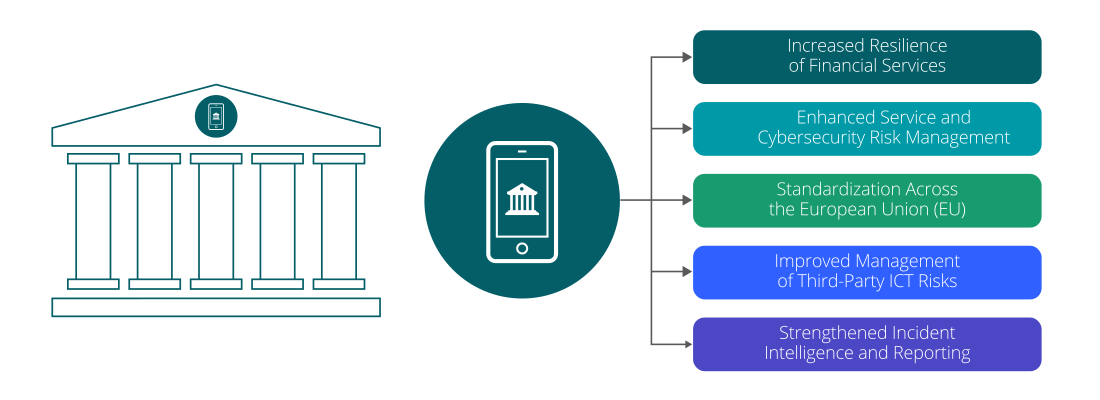
Digital Resilience With a Strong Foundation Across Ecosystems

How to Meet DORA’s Compliance and Performance Standards With NETSCOUT
Read this White Paper for expert advice to help financial institutions strengthen their digital operational resilience and protect customers.
Outcomes That Matter
Strengthen Digital Resilience and Meet DORA Requirements
Build Resilience with Early Detection
Real-time packet-based inspection and alerts provide a proactive approach to data analysis and issue detection, with swift analysis of network infrastructure, users, and application data.
Respond and Recover Quickly
Rapid recovery with minimal downtime, deep post-incident analysis, comprehensive understanding, and reporting for continuous improvement and an enhanced security posture.
Strengthen Resilience and Compliance
Implement comprehensive risk management frameworks and swift incident response strategies that ensure important business services adhere to customer expectations and align with DORA regulations.
Fast-Track DORA Compliance
Mastering DORA compliance starts with the right strategies to improve service performance, strengthen cybersecurity, and build operational resilience. Find out how to optimize your digital operations and stay ahead of regulatory demands.
Proactively Strengthen Your Digital Operational Resilience at Scale
DORA’s comprehensive framework is built around five key pillars: Risk Management, Incident Reporting, Resilience Testing, Digital Supply Chain, and Intelligence Sharing. Together, these pillars form the foundation for strengthening the services of financial institutions operating in the EU and ensuring a secure, agile financial sector for customers. However, misconceptions about DORA often create confusion. Separating myth from fact is crucial to becoming fully DORA compliant.
10 Common Myths About DORA
The Digital Operational Resilience Act (DORA) brings sweeping changes to how financial institutions approach digital risk and resilience in the European Union (EU). Here are ten misconceptions clarified.
Only EU Companies Need to Comply
Any financial entities doing business in the EU, including banks, investment firms, insurers, and payment processors, fall under DORA's scope, regardless of their geographic location.
DORA Only Applies to Large Institutions
DORA applies to financial entities of all sizes, from small payment providers to major multinational banks. It establishes a consistent framework for digital operational resilience, regardless of an entity's size.
DORA Is Mostly About Security
The Act is much more than that. It addresses risk management, performance management, 3rd-party dependencies, operational resilience, incident reporting, and overall digital infrastructure stability.
This Doesn't Affect 3rd-Party Vendors
Third-party providers like cloud services, IT platforms, and even outsourced solutions must also meet DORA oversight requirements. Financial entities are responsible for ensuring vendor compliance.
DORA Compliance Is a One-Time Effort
Compliance is considered ongoing. It demands continuous monitoring to ensure systems are healthy, regular testing to validate resilience against emerging threats, updates, etc.
This Only Applies to Financial Disruptions
DORA covers a wide range of operational risks, including IT system failures, cyber incidents, supply chain disruptions, and other events impacting digital operations.
Only IT Teams Need to Worry About DORA
The Act affects the entire company, from C-level executives to compliance officers, and requires a coordinated effort to ensure alignment with the regulation and avoid fines for non-compliance.
DORA Is Only About Protecting Data
DORA is concerned with resilience of the entire digital ecosystem, including risk management, 3rd-party oversight, incident reporting, and maintaining digital operational continuity.
DORA Doesn't Require Testing
Regular testing of digital resilience, including synthetic testing, threat simulations, and risk assessments, is a critical requirement of DORA to ensure systems can withstand risks.
It Is Optional to Other Regulations
DORA is not optional. Financial entities must adhere to DORA requirements regardless of existing regulatory frameworks.
Resources
Remaining compliant with the Digital Operational Resilience Act (DORA) requires an ongoing strategy that incorporates...
The Digital Operational Resilience Act (DORA) is a regulatory wake-up call urging financial institutions to protect...
Read this Fact Sheet to see how NETSCOUT can help strengthen and improve your digital operational resilience.
See how NETSCOUT’s threat detection and response solutions enable compliance with DORA.
Read this White Paper for expert advice to help financial institutions strengthen their digital operational resilience...
The Digital Operational Resilience Act (DORA), a European Union (EU) regulation, supersedes and surpasses previous...