
Challenges
AI Is Becoming the Ultimate Shadow Technology
The barrier to entry is almost nonexistent.
Traditional audit trails and access controls are easy to bypass, leaving every organization highly vulnerable to shadow AI. By the time it’s discovered, the operational blast radius is already set:
- Network Performance Impacts: High volumes of unmanaged AI traffic overwhelm infrastructure, causing severe network congestion and latency spikes.
- New Cybersecurity Attack Paths: Prompt injection, unmonitored apps, extensions, plugins, and hidden dependencies create critical security blind spots.
- Data Exposure & Compliance Risks: Excessive application permissions and unapproved public tools create real threats of intellectual property theft and regulatory noncompliance.
- Inaccurate AI Outputs: Hallucinations and logic errors from unsanctioned AI systems can distort business decisions and disrupt enterprise workflows.
NETSCOUT Smart Data surfaces shadow AI at every corner of the network. This gives observability and security teams actionable, real-time insight into AI usage, cutting through alert noise with clear, meaningful evidence.
Outcomes That Matter
How to Detect and Manage Shadow AI Across Your Enterprise
Build a Complete AI Inventory
Discover AI services across endpoints, cloud, and SaaS, including unauthorized models and third-party integrations, to reveal AI usage that conventional discovery approaches miss.
Uncover High-Risk AI Activity
Pinpoint who is using AI, where, and how it is being used to focus attention on the interactions posing the greatest enterprise risk and respond faster when issues emerge.
Protect Network and Application Performance
Detect unmanaged AI traffic and its impact on services early to fix performance issues before they disrupt users and critical operations.
Know Where Your Data Goes
Identify shadow AI activity involving customer information, intellectual property, or regulated data to protect vital business assets from unauthorized exposure.
Strengthen Governance and Compliance
Use defensible, network-derived evidence of actual AI behavior to shape governance policies based on facts rather than waiting for employee disclosures.
NETSCOUT’s Solution and How It Delivers Value
Discover Unapproved AI Activity With Smart Data
Every AI interaction generates network traffic. NETSCOUT analyzes that traffic using proprietary deep packet inspection technology at scale and Adaptive Service Intelligence, transforming it into Smart Data that reveals AI communications across cloud, hybrid, remote, and on-premises environments.
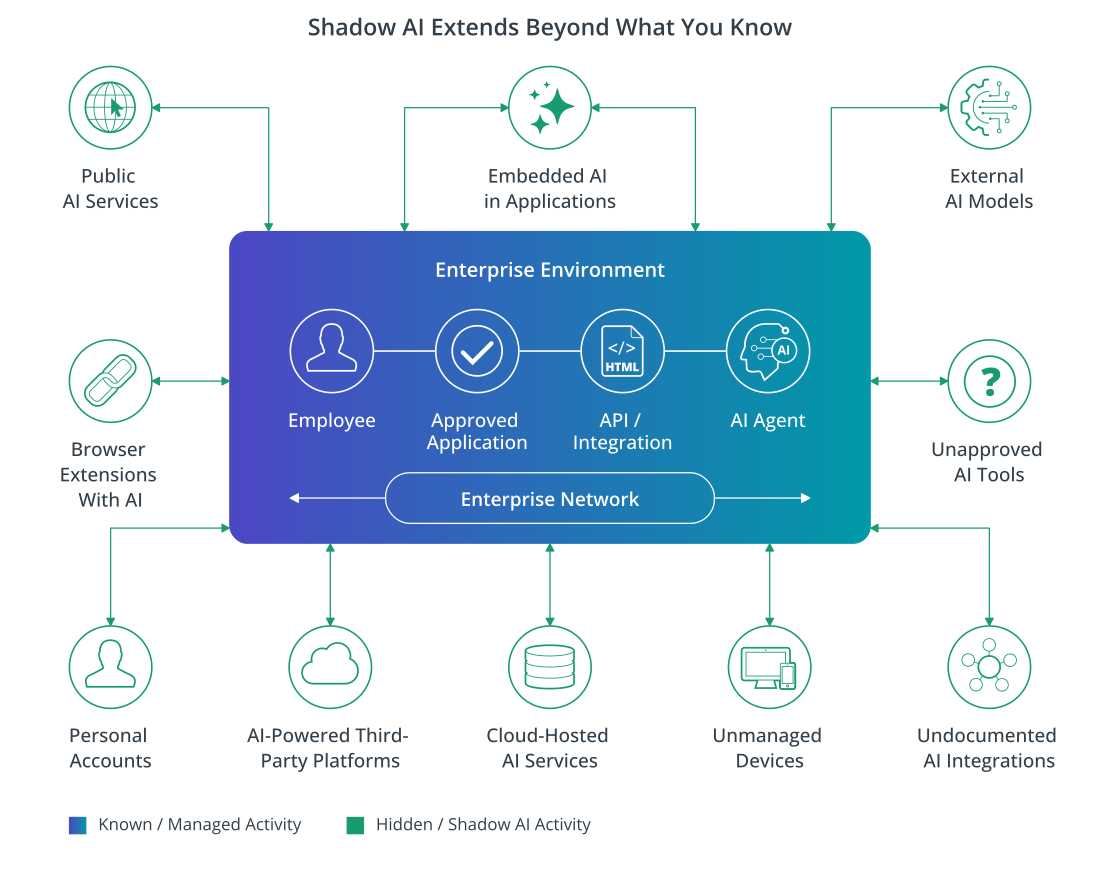
Unlike approaches that depend primarily on software inventories or managed endpoints, Smart Data reveals AI activity beyond traditional discovery methods. Organizations can uncover unapproved AI services, embedded AI capabilities, APIs, unmanaged devices, personal accounts, machine traffic, and remote users that may otherwise go undetected.
Smart Data provides network-level evidence showing who or what is using AI, where, and when, helping teams identify the users, devices, locations, workloads, or business units connecting to AI services.
For encrypted AI communications, NETSCOUT uses application, protocol, session, certificate, endpoint, and traffic metadata to provide additional insight while preserving valuable operational context.
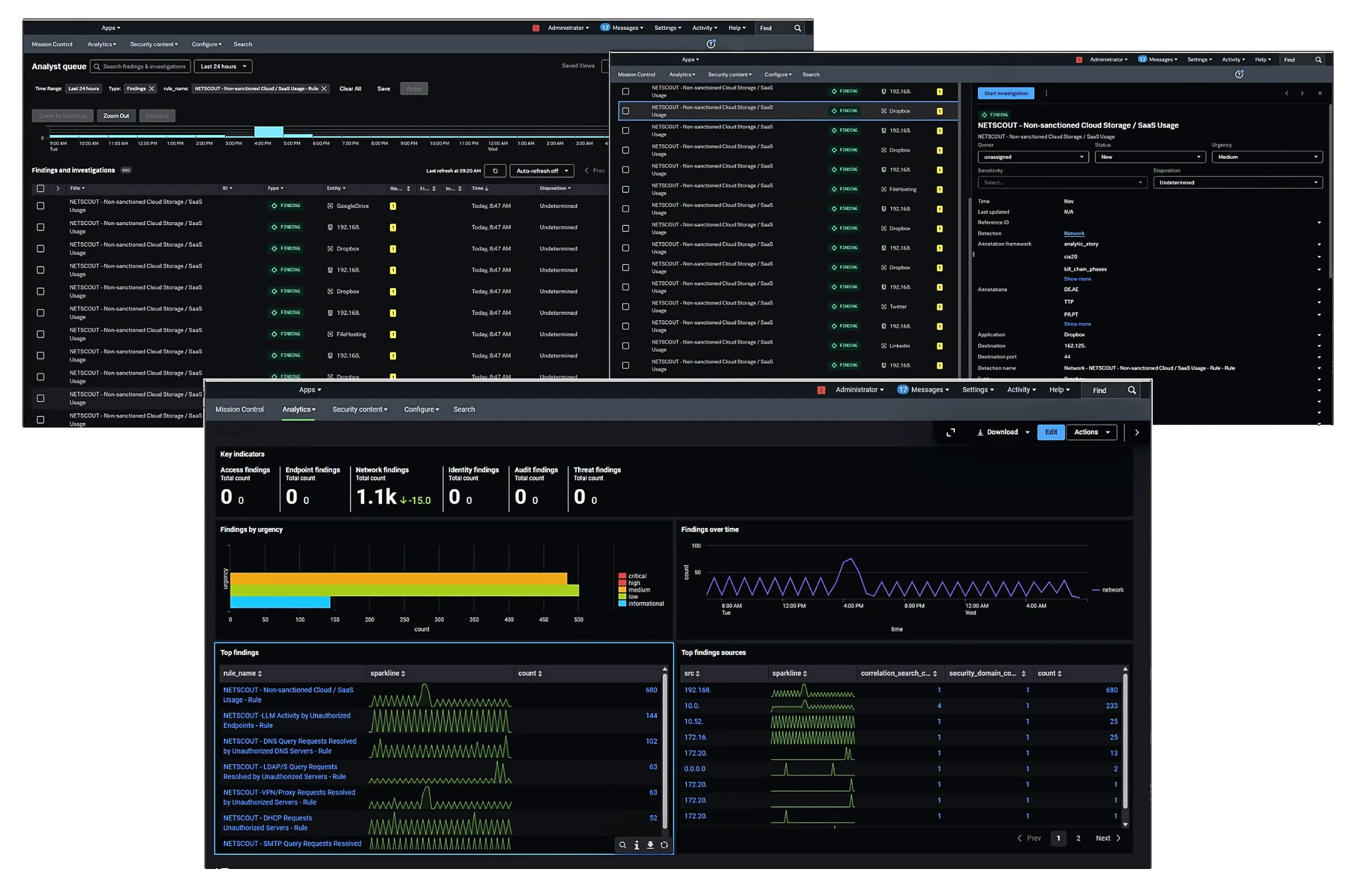
See The Evidence For Yourself
Smart Data passively reveals activity without requiring teams to instrument every application, endpoint, or service individually. More importantly, it can uncover activity you haven’t been able to instrument yet or didn’t know about in the first place.
Resources
In offices across the world, the most productive employees are already working with artificial intelligence (AI), and...
FAQs
Frequently Asked Questions
How does NETSCOUT detect shadow AI activity?
NETSCOUT analyzes network traffic using deep packet inspection and transforms observed AI communications into Smart Data. This network-derived intelligence helps identify communications with AI applications, platforms, APIs, embedded AI capabilities, and related infrastructure that may not appear in approved software inventories or governance systems.
Can NETSCOUT identify which users or systems are accessing unapproved AI services?
Yes. Smart Data provides context about the users, devices, applications, locations, workloads, and network sessions associated with AI communications. This helps organizations understand where shadow AI originates, which systems are involved, and which business services may be affected.
Can NETSCOUT detect more than public AI chatbots?
Yes. Shadow AI can include AI APIs, embedded AI capabilities within otherwise approved applications, AI agents, automated workflows, cloud-hosted models, browser extensions, experimental applications, and undocumented AI services communicating across the enterprise. NETSCOUT’s network-level visibility can help uncover these services and their dependencies, even when they are not documented or centrally managed.
How does NETSCOUT provide visibility into encrypted shadow AI traffic?
NETSCOUT analyzes application, protocol, session, certificate, endpoint, and traffic metadata associated with encrypted communications. The available insight depends on the deployment and whether authorized decryption is implemented, but network-derived context can still help teams identify and investigate potentially unauthorized AI activity.
What outcomes can organizations expect from NETSCOUT shadow AI visibility?
NETSCOUT helps organizations build a more accurate inventory of AI usage, reduce visibility gaps, accelerate investigations, identify hidden dependencies, and support governance and compliance with network-derived evidence. This enables enterprises to make informed decisions about whether an AI service should be approved, restricted, monitored, or removed based on observed activity rather than incomplete inventories or employee disclosures.