Challenges
Traditional DDoS Defenses Can’t Stop Multi-Vector Attacks
Network Security teams must keep critical services online against modern DDoS attacks that routinely employ multiple vectors that dynamically evolve in response to mitigation. Relying solely on cloud defenses is reactive and misses smaller, short-lived attacks, while on-premises solutions cannot handle large volumetric floods that exceed internet circuit capacities.
Manual or single-layer approaches respond too slowly, over/under block attacks, and are incomplete, leading to increased downtime, operational risk, and business impact when applications and revenue-generating services are disrupted.
CDN-based protections can help absorb volumetric attacks but may not detect attacks that bypass CDN-hosted applications, target exposed infrastructure, or exploit encrypted traffic and application-specific behaviors.
To stay ahead of adaptive, multi-vector attacks, organizations need an intelligent, hybrid defense that delivers automated mitigation at scale.
Outcomes That Matter
Mitigate All Types of Attacks Before They Impact Services
Avoid Downtime Costs
Protect service availability to prevent lost revenue, regulatory fines, and customer churn caused by outages and degraded performance.
Faster Time to Mitigation
Use Automatic, transparent AI to detect and precisely mitigate, reducing response time from hours to seconds and limiting disruption.
Comprehensive DDoS Defense
Provide a hybrid DDoS mitigation approach that protects applications, infrastructure, and internet-facing services, including attack vectors that cloud-only and CDN-based protections may not fully address.
NETSCOUT’s Solution and How It Delivers Value
Multilayer DDoS Mitigation
NETSCOUT provides enterprises with multilayer DDoS protection protection that stops attacks at the edge, scales in the cloud, and adapts in real time. Unlike cloud-only approaches, NETSCOUT's hybrid architecture provides visibility and mitigation for attacks targeting infrastructure, services, and traffic flows that may not traverse CDN protection layers. By combining always-on, on-premises mitigation with cloud-scale capacity and AI-driven intelligence, NETSCOUT protects critical services from all attack types and sizes.
- On-premises, Arbor Edge Defense (AED) provides inline, stateless mitigation positioned in front of firewalls and other stateful devices. It detects and blocks smaller, short-lived, and state-exhaustion attacks before they disrupt applications.
- For larger volumetric attacks, Arbor Edge Defense’s Cloud Signaling™ automatically redirects traffic to Arbor Cloud. With 16 global scrubbing centers and 16 Tbps of mitigation capacity, Arbor Cloud absorbs high-volume floods while maintaining service availability.
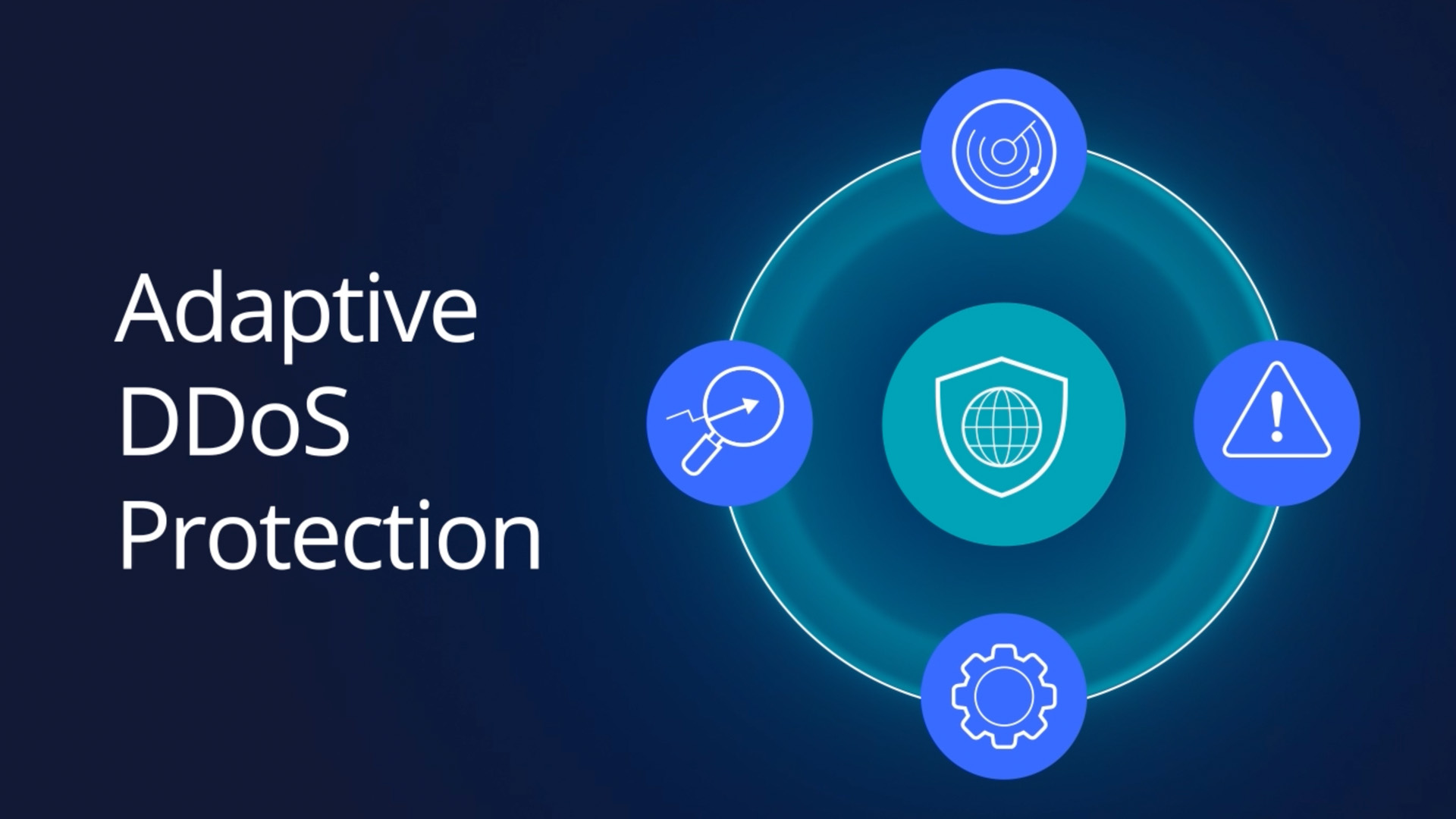
- ATLAS Intelligence Feed, continuously strengthens this architecture with AI-driven global threat intelligence. Adaptive DDoS Protection dynamically adjusts countermeasures as attack vectors evolve, ensuring fast, precise mitigation across on-premises and cloud environments.
Together, this hybrid approach delivers resilient, end-to-end defense against modern multi-vector DDoS attacks.
Analyst Report
NETSCOUT’s DDoS Solutions Named Leader and Ace Performer in SPARK MATRIX for Distributed Denial of Service (DDoS) Mitigation, 2026
Related Products
Arbor Edge Defense
On-premises, stateless, always-on, DDoS protection.
ATLAS Intelligence Feed
Continuous global, AI-powered DDoS threat intelligence.
Arbor Cloud
ISP-agnostic, cloud-base, managed DDoS protection with global scrubbing capacity for large-scale attacks.
What Our Customers Are Saying
“What I like best about Arbor Edge Defense is its ability to automatically block outbound connections to malicious sites, which significantly reduces the risk of data exfiltration and advanced threats. It also provides strong protection at the network edge without adding noticeable latency, and the reporting features make it easy to monitor and respond to potential attacks.”
– Metin K., Security Manager | Read full review
Resources
Learn how Arbor Edge Defense is compatible with any Cloud DDoS Solution to form the most comprehensive protection...
NETSCOUT Named both a Technology Leader and Ace Performer in DDoS Mitigation for 2025
Due to the creation of new attack vectors and Adaptive DDoS Attacks, the need for on-premises protection with its...
FAQs
Frequently Asked Questions
Why isn’t cloud-only DDoS protection enough?
Most attacks are small and short-lived, making them difficult for cloud services to detect and mitigate before damage occurs.
How does Arbor hybrid protection improve mitigation optimization and scalability?
Arbor Edge Defense on-premises blocks most attacks locally, while Arbor Cloud mitigation is automatically triggered for large-scale volumetric events. As attacks evolve, the solution automatically adapts mitigation to provide optimized protection.
What makes the NETSCOUT Arbor hybrid DDoS protection solution different from other vendors?
NETSCOUT’s differentiation comes from global visibility through the ATLAS Threat Intelligence platform, carrier-grade scalability, and a broad portfolio spanning on-premise, in-cloud, and hybrid deployment models. This enables organizations to detect emerging attacks early, mitigate at scale, and tailor protection to any network architecture.
How does NETSCOUT’s hybrid DDOS protection model work?
Hybrid protection blends on-premise defenses for fast, precise mitigation with cloud scrubbing for large volumetric attacks that overwhelm entire internet circuits. When thresholds are met, Sightline or AED automatically signals Arbor Cloud to begin traffic diversion and scrubbing, ensuring seamless protection across all attack types.
What factors should organizations consider when choosing a DDoS mitigation solution?
Key factors to consider include coverage across all attack types, scalability, visibility, integration with existing infrastructure, hybrid capabilities, automation features, and the vendor’s track record in similar environments. Organizations should ensure their solution can protect both current and future network architectures.
Does the Arbor hybrid DDoS attack protection solution use AI?
Yes. AI is leveraged to create the continuous ATLAS Intelligence Feed and the solution's Adaptive DDoS Protection functionality.
What Is CDN-Aware Mitigation and How Does It Work?
The Problem: Attack Sources Hidden Behind CDN Proxies
CDNs act as reverse proxies, meaning all traffic arriving at the enterprise edge appears to originate from the CDN's own IP addresses—masking the true source of both legitimate users and attackers alike. This makes it impossible for traditional on-premises solutions to apply per-source mitigation without blocking legitimate users.
AED's Solution: Per-Source Countermeasures Through CDN Infrastructure
AED's CDN-Aware Mitigation identifies malicious sources concealed behind shared CDN infrastructure and applies precise, service-specific countermeasures to block attacks without denying access to legitimate customers using the same CDN.
By integrating its TLS transparent proxy with application header inspection, AED:
- Restores source-level visibility — extracts the true client IP from application headers forwarded by the CDN proxy
- Applies per-source countermeasures — targets attack traffic at the individual source level, not the CDN proxy IP block
- Preserves legitimate access — blocks malicious sources precisely without disrupting legitimate customers transiting the same CDN infrastructure
- Protects both traffic paths — mitigates attacks arriving through the CDN and direct-to-origin attacks that bypass it entirely
What Types of DDoS Attacks Can Bypass CDN Protection?
CDN-based solutions often fall short in detecting and mitigating:
- Low-volume, stealthy application-layer attacks (HTTP/S GET and POST floods, DNS query floods, API exhaustion)
- TCP state-exhaustion attacks targeting firewalls, load balancers, and IPS devices at the enterprise edge
- Encrypted (HTTPS/TLS) attack traffic that CDNs forward rather than inspect
- Direct-to-origin attacks that bypass CDN routing entirely by targeting the origin server's IP directly
- CDN-exploiting attacks where attackers hide behind CDN proxy infrastructure to obscure their source