


Brad Christian
Senior Search Engine Optimization Specialist
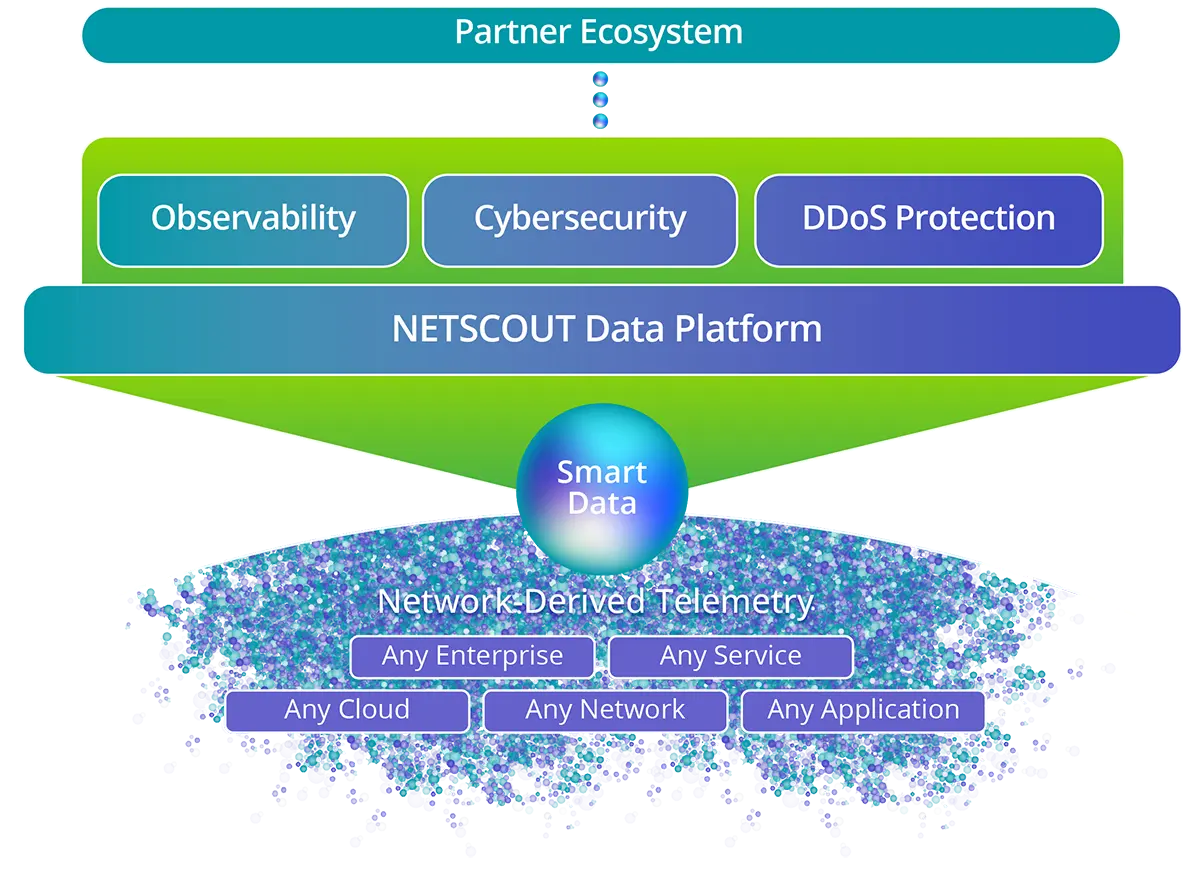
Trusted Operational Intelligence for Modern Digital Environments
Digital environments are more distributed, dynamic, and dependent than ever. Applications span hybrid clouds. Users connect from anywhere. Services rely on complex infrastructure, third-party platforms, APIs, and network paths. As a result, organizations need more than disconnected monitoring signals. They need trusted intelligence that shows how digital services are actually performing in context.
The NETSCOUT® data platform helps provide that visibility by generating Smart Data from real-time, wire-level activity across your entire digital ecosystem.
Smart Data is structured, enriched, AI-ready operational intelligence derived from observed digital activity. It gives teams a trusted view of how services, applications, users, and infrastructure are performing in context, so they can detect issues faster, understand impact more clearly, and act with confidence.
Unlike sampled, synthetic, or tool-specific telemetry, Smart Data is built from real operational activity.
Not sampled. Not inferred. Observed.
Why Smart Data Matters
Organizations do not have a shortage of data. They have a shortage of trusted, contextual intelligence.
IT, network, security, and operations teams often rely on many different tools, each producing its own view of performance, availability, user experience, or risk. These tools are valuable, but they can also create fragmented visibility. When something goes wrong, teams may spend too much time comparing dashboards, correlating alerts, and debating where the issue started.
Smart Data helps close that gap.
By turning observed digital activity into structured, contextual intelligence, NETSCOUT Smart Data gives teams a shared understanding of service health. It helps answer critical questions faster:
- What is happening?
- Where is it happening?
- Who is affected?
- What services are impacted?
- How should teams respond?
This helps organizations move from reactive troubleshooting toward faster detection, clearer impact analysis, and more confident action.
Smart Data and the Visibility Challenge
Modern digital services depend on many connected systems working together. A single user experience may involve an application, network path, cloud service, data center, DNS service, API, database, security control, and third-party provider.
When visibility is limited to individual tools or isolated data sources, teams may only see part of the picture. That makes it harder to understand whether an issue is caused by the application, the network, infrastructure, cloud services, security events, or user access conditions.
Smart Data improves visibility by providing a broader, more consistent view of how digital services are performing across the environment. It helps teams see relationships between users, applications, services, infrastructure, and networks so they can understand not just that something is wrong, but why it matters and what to do next.
How Smart Data Complements MELT Data
Metrics, events, logs, and traces remain essential, but they often provide fragmented views of complex digital environments because they depend on where instrumentation has been deployed. NETSCOUT Smart Data goes further by deriving high-fidelity intelligence from observed activity across the network itself. This network-based perspective provides a more comprehensive view of digital interactions, capturing activity beyond the limits of individual APM sensors and helping teams understand what is happening, where it is happening, who is affected, and how to respond.
This gives observability, cybersecurity, and AIOps workflows a more trusted foundation for correlation, investigation, and automation.
Smart Data does not replace traditional observability data. It strengthens it. By adding contextual intelligence from observed digital interactions, Smart Data helps teams reduce blind spots, validate what other tools are reporting, and act with greater confidence.
How Smart Data Improves Visibility
Smart Data helps organizations improve visibility by creating a trusted operational view across complex environments.
It helps teams:
- See how users, applications, services, and infrastructure are actually performing.
- Understand service impact across hybrid, cloud, edge, and distributed environments.
- Identify whether performance issues are tied to the network, application, infrastructure, cloud, or user environment.
- Reduce blind spots caused by incomplete telemetry, siloed tools, or limited instrumentation.
- Give IT, network, security, and operations teams a shared source of truth.
- Support faster investigation, response, and resolution.
This visibility is especially important as organizations modernize their environments and adopt more cloud services, SaaS applications, remote access models, automation, and AI-driven operations.
Benefits of Smart Data
Faster Issue Detection and Resolution
Smart Data helps teams detect service disruptions and performance issues sooner. With contextual intelligence from observed activity, teams can more quickly understand where an issue is occurring, what is affected, and how to prioritize response.
Clearer Service Impact
Smart Data helps connect technical conditions to user and business impact. Instead of seeing only isolated alerts or performance indicators, teams can better understand which users, applications, services, or locations are affected.
Improved Operational Confidence
When teams work from fragmented data, investigations can slow down. Smart Data provides a more trusted foundation for decision-making, helping teams act with greater confidence during incidents, investigations, and service reviews.
Stronger Digital Resilience
Smart Data helps organizations identify risks earlier, understand service dependencies, and reduce the duration and impact of disruptions. This supports more resilient digital operations and better continuity for critical services.
Better Support for Cybersecurity and DDoS Protection
Because Smart Data reflects observed digital activity, it can help security teams identify suspicious behavior, investigate incidents, and understand the scope and impact of attacks. It also supports DDoS protection by helping teams understand traffic behavior and respond to disruptions more effectively.
A Trusted Foundation for AIOps and AI-Driven Operations
AI and automation are only as effective as the data they use. Smart Data provides structured, enriched, AI-ready operational intelligence that can help improve correlation, prioritization, automation, and predictive insights.
What are Common Use Cases for Smart Data?
Smart Data can support a range of operational, security, and business needs, including:
- Network observability
- Network performance management
- Application performance management
- 5G service assurance
- Cybersecurity operations
- DDoS mitigation
- Hybrid and multicloud observability
- AIOps and automation
- Incident investigation and root-cause analysis
- Digital service resilience
Why NETSCOUT Smart Data Is Different
NETSCOUT Smart Data is different because it is generated from observed digital interactions across complex enterprise and service provider environments. Instead of relying only on sampled metrics, synthetic tests, or fragmented tool-specific telemetry, Smart Data provides structured, contextual intelligence that reflects how services, applications, and users are actually performing.
That creates a shared data foundation for observability, cybersecurity, DDoS protection, and AIOps: one source of truth that teams can use to resolve disruptions faster, improve resilience, and support AI-driven operations with trusted operational inputs.
With NETSCOUT Smart Data, organizations can move beyond fragmented visibility and gain a clearer, more actionable understanding of their digital environments.
Smart Data helps organizations see what matters across complex digital environments.
By turning observed digital activity into structured, enriched, AI-ready intelligence, NETSCOUT Smart Data gives teams the context they need to detect issues faster, understand impact more clearly, and respond with confidence.
Metrics, events, logs, and traces remain valuable, but they are only part of the visibility picture. NETSCOUT Smart Data adds a trusted layer of operational intelligence that helps observability, cybersecurity, DDoS protection, and AIOps teams work from a shared source of truth.
The result is better visibility, faster resolution, stronger resilience, and more confident digital operations.
FAQs
What is Smart Data?
Smart Data is structured, enriched, AI-ready operational intelligence derived from observed digital activity. By generating metadata based on deep packet inspection, it provides the context that teams need to understand how services, applications, users, and infrastructure are performing.
What is NETSCOUT Smart Data?
NETSCOUT Smart Data is operational intelligence generated from observed digital interactions across complex enterprise and service provider environments. It provides a shared data foundation for observability, cybersecurity, DDoS protection, and AIOps.
How is Smart Data different from MELT data?
MELT data refers to metrics, events, logs, and traces. These data types are important, but they can be fragmented, incomplete, or dependent on instrumentation. Smart Data complements MELT data with high-fidelity intelligence derived from observed activity from the network perspective, in real-time, at wire-level, helping teams understand what is happening, where it is happening, who is affected, and how to respond.
Does Smart Data replace metrics, events, logs, and traces?
No. Smart Data does not replace MELT data. It complements and strengthens traditional observability by adding a trusted, contextual view of real digital activity.
Why is Smart Data important for visibility?
Smart Data improves visibility by showing how users, applications, services, and infrastructure are actually performing across the digital environment. This helps teams reduce blind spots, understand service impact, and resolve issues faster.
How does Smart Data support cybersecurity?
Smart Data helps security teams understand observed digital activity in context. This can support threat detection, incident investigation, traffic analysis, and response by giving teams clearer insight into, and trusted evidence about, what happened and what was affected.
How does Smart Data support AIOps?
AIOps depends on trusted data. Smart Data provides structured, enriched, AI-ready operational intelligence that can improve correlation, prioritization, automation, and predictive analysis.
Who benefits from Smart Data?
IT operations, network operations, security operations, cloud teams, application teams, service providers, and business leaders can all benefit from Smart Data because it provides a shared, trusted view of digital service performance and risk.