Overview
Building Resilient, Always-Available State and Local Government IT Infrastructure
By 2026, state and local governments are operating in a fully digital-first environment. Citizen services, ranging from DMV transactions and court systems to public safety communications, unemployment, and SNAP benefits distribution, depend on always-available applications and secure, high-performing networks.
As agencies modernize legacy infrastructure and expand cloud adoption, digital ecosystems are becoming more distributed and complex. Hybrid IT, third-party service providers, and inter-agency data sharing are increasing operational interdependencies. At the same time, ransomware, DDoS attacks, and nation-state activity continue to target public sector entities of all sizes.
As digital reliance grows, so does the impact of service disruption. Even brief outages can delay critical benefits, disrupt emergency response coordination, and erode public trust. To meet rising expectations for accessibility, security, and transparency, agencies must strengthen visibility and resilience across their entire digital environment.
Challenges
Challenges Facing State and Local Government IT & Cybersecurity Teams
Decentralized IT Environments
Multiple departments, external vendors, and shared services create fragmented visibility. Gaps across hybrid and multi-cloud environments make it difficult to detect and resolve issues quickly.
Mission-Critical Availability Requirements
Public-facing services must always remain accessible. Performance degradation or downtime directly affects citizens’ ability to access benefits, permits, courts, and emergency services.

Legacy Systems and Technical Debt
Many agencies rely on aging infrastructure that was not designed for modern security controls, such as Multi-Factor Authentication (MFA) or advanced monitoring, which can make upgrades complex and costly.
Compliance and Accountability Pressures
Regulatory mandates and public transparency requirements demand clear visibility into network performance, security posture, and incident response effectiveness to deliver clear reports when audits are required.
Evolving Cyberthreats
Ransomware, DDoS campaigns, and advanced persistent threats increasingly target government agencies. Security teams must defend against rapidly changing tactics while protecting essential public services.

Outcomes That Matter
Delivering Secure, High-Availability Digital Services for Constituents
Maintain Quality Service Performance to Improve Citizen Experience
Gain comprehensive, deep visibility and insight across the entire digital ecosystem from hybrid cloud, colocation, and on-premises environments to eliminate blind spots and maintain service performance.
Avoid Risks by Adopting a Proactive Defense with Curated Threat Intelligence
Stay ahead of emerging cyberthreats with integrated intelligence that strengthens detection, accelerates response, and supports compliance initiatives.
Working With Partners Government Trusts
NETSCOUT works with major implementation partners and distributors, including Four Inc. and ImmixGroup to integrate seamlessly into Federal Government environments and streamline procurement.
Faster Incident Resolution that Reduces Risk to Performance & Availability
Correlate network, application, and threat intelligence to quickly identify root causes and minimize operational and public impact.
Assured Service Availability
Protect critical citizen-facing applications from DDoS attacks and performance disruptions to ensure uninterrupted public access.
Use Cases
Empowering State & Local Government Agencies With Scalable Observability and Security
NETSCOUT helps state and local governments observe, secure, and assure availability in complex distributed networks.


Why NETSCOUT for State and Local Agencies?
NETSCOUT performance management solutions are required to help manage network, application, and UC&C platforms that support many state and local government departments.
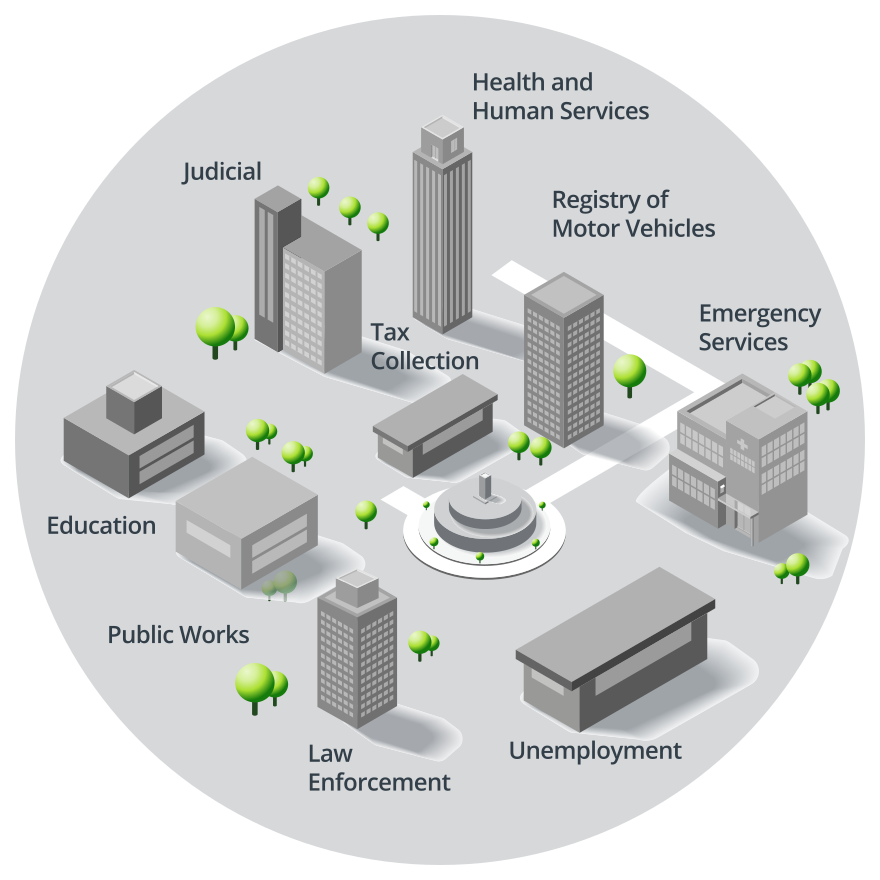
Click each department to learn more.

Judicial
Secure record-keeping and docket management systems are critical to judicial systems. County and state courts rely heavily on their Document Management Service (DMS) for relevant client information, case files, client briefings, and court filings. NETSCOUT’s Visibility Without Borders Platform provides network and application performance insights to ensure DMS is secure and available.

Education
Supporting school districts widespread over large geographical areas requires a robust network infrastructure. Teachers, students, parents, and administrators rely on quality digital experiences in collaborative portals, SaaS applications like Google Meet, and Learning Management System (LMS) applications to enhance education. nGenius Enterprise Performance Management provides visibility the digital experience quality from any location.

Public Works
Achieve consistent customer excellence, with scalable options for 4G solutions while evolving to meet the demands of emerging 5G/IoT/Cloud initiatives.

Law Enforcement
State police officers, county sheriffs, and city officials are just a few examples of local law enforcement that rely on technology to do their jobs and keep the community safe. Swift access to databases for license plate information, outstanding warrants, and surveillance camera footage require reliable network and application performance from anywhere, at any time.

Unemployment
Unemployment assistance agencies require updated technology to access job databases, gather contact information, and pay benefits. PCI compliance and the safekeeping of account and social security numbers is a high priority. NETSCOUT’s Visibility Without Borders Platform provides real-time visibility for secure and available network and application performance at any scale.

Emergency Services
Local emergency services are responsible for executing efficient disaster response plans and assisting the public. Monitoring network performance is critical to provide continuous 911 and 311 services. From fire and police departments to EMT and ambulance services to constituent portals for weather emergencies, nGenius Enterprise Performance Management provides visibility into network and application performance.

Registry of Motor Vehicles
The RMV manages masses of data, making network and application performance critical to daily operations and record-keeping. Maintaining PCI compliance for online payments, providing reliable access to online portals for license renewals and driver’s test signups, and enabling employee privileges to secure applications require NETSCOUT’s end-through-end visibility into network and application performance, availability, and security.

Health and Human Services
HHS has a direct effect on many communities, providing medical care, financial support, substance abuse assistance, and more invaluable services to the public. NETSCOUT solutions monitor network and application performance to empower HHS as they aid the community with services like telehealth, providing high-quality web conferencing capabilities while also ensuring they secure patient data and abide by HIPAA privacy regulations.

Tax Collection
State tax collection is responsible for managing sensitive data and receiving income statements for corporations and constituents. nGenius Enterprise Performance Management provides real-time visibility and insights into network and application performance to ensure operations run smoothly.
What Our Partners Are Saying
“We’re proud to collaborate with trusted technology leaders across our robust partner ecosystem to deliver mission-ready solutions. NETSCOUT’s proven ability to strengthen Zero Trust Architectures and accelerate adoption—securely, efficiently, and at scale—makes them a critical pillar of our cybersecurity strategy for both DoD and civilian agencies in addition to SLED environments.”
Chris Wilkinson, Executive Vice President of Sales at Four Inc., a leading public sector IT distributor
Resources
With the continued help of the NETSCOUT VaaS team, this state agency was able to upgrade their environment to support...
NETSCOUT nGenius solutions for observability provides State IT teams with the end-to-end network visibility and...
nGeniusONE® delivers end-to-end visibility required to implement and manage the complex technologies deployed in today’s...
FAQs
Frequently Asked Questions
Why are state and local governments frequent targets for DDoS and ransomware attacks?
Government agencies manage sensitive citizen data and critical public services, making them attractive targets for financially motivated attackers and nation-state actors.
How can agencies improve visibility across legacy and cloud environments?
Unified network-level visibility enables teams to monitor performance and security consistently across hybrid, multi-vendor ecosystems.
What is the impact of service downtime on public agencies?
Outages can delay benefits, disrupt emergency services, and damage public trust, often resulting in regulatory scrutiny and reputational harm.
How does DDoS protection support public service continuity?
By detecting and mitigating attacks in real time, agencies can keep citizen-facing applications accessible and responsive.