DDoS Threat Intelligence Report: Unmasking the Swarm (Issue 16, 2H 2025)
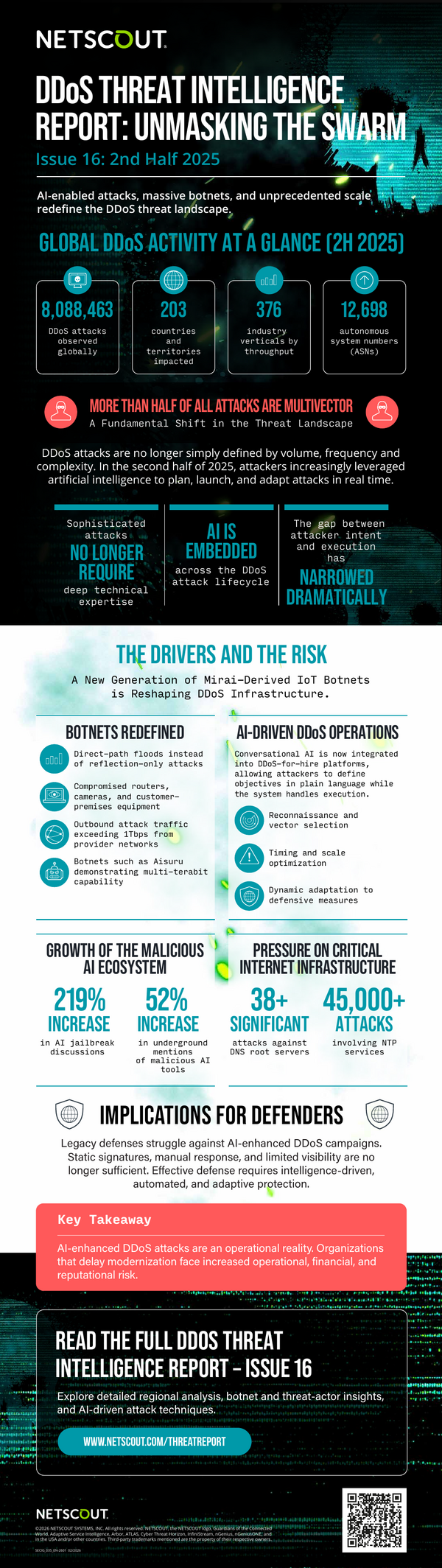
Security teams can learn how artificial intelligence is changing DDoS attacks, based on the 2H 2025 findings in NETSCOUT's DDoS Threat Intelligence Report, Issue 16. The infographic covers global attack counts, Mirai-derived botnets, AI-driven attack operations, and what defenders need to change.
What did DDoS activity look like in 2H 2025?
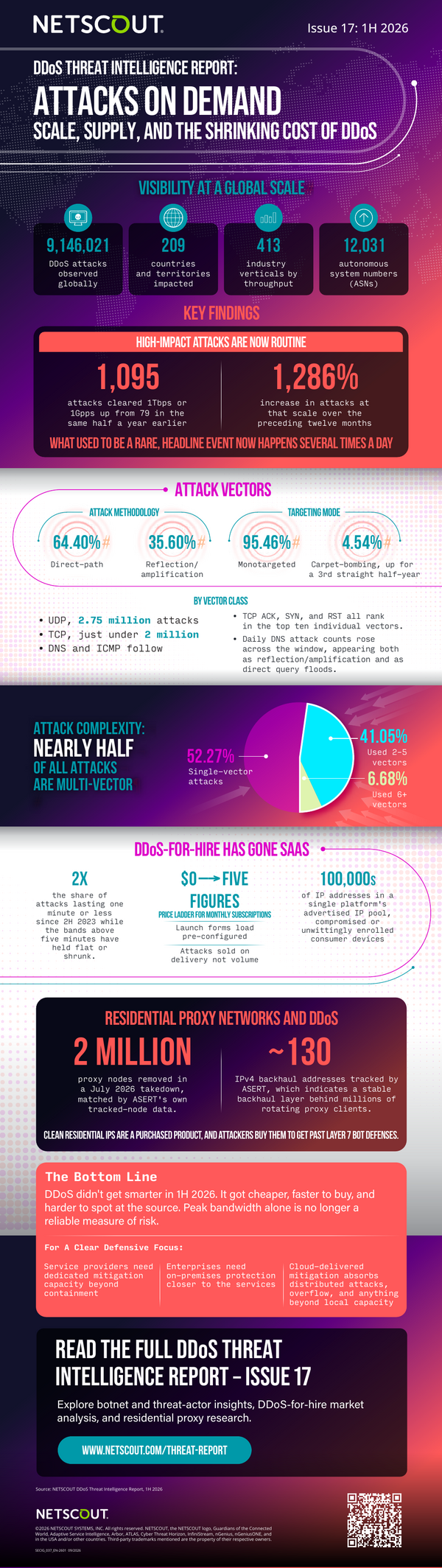
NETSCOUT observed 8,088,463 DDoS attacks globally, affecting 203 countries and territories, 376 industry verticals, and 12,698 autonomous system numbers (ASNs). More than half of all attacks were multi-vector.
How is AI changing DDoS attacks?
Attackers increasingly used AI to plan, launch, and adapt attacks in real time. Conversational AI is now built into DDoS-for-hire platforms, so attackers can state objectives in plain language while the system handles execution. The infographic lists these AI-driven functions:
• Reconnaissance and vector selection
• Timing and scale optimization
• Dynamic adaptation to defensive measures
What botnet trends does the infographic describe?
A new generation of Mirai-derived IoT botnets is reshaping DDoS infrastructure. Botnets such as Aisuru show multi-terabit capability, compromised routers, cameras, and customer-premises equipment feed them, and outbound attack traffic from provider networks has exceeded 1 Tbps.
What should defenders do?
Static signatures, manual response, and limited visibility no longer suffice. The infographic calls for intelligence-driven, automated, and adaptive protection.
Frequently Asked Questions
How large is the malicious AI ecosystem?
The infographic reports a 219 percent increase in AI jailbreak discussions and a 52 percent increase in underground mentions of malicious AI tools.
Which infrastructure came under pressure?
It cites 38 or more significant attacks against DNS root servers and 45,000 or more attacks involving NTP services.
Asset Type: Infographic