


SPARK Matrix: Network Observability, Q3 2025
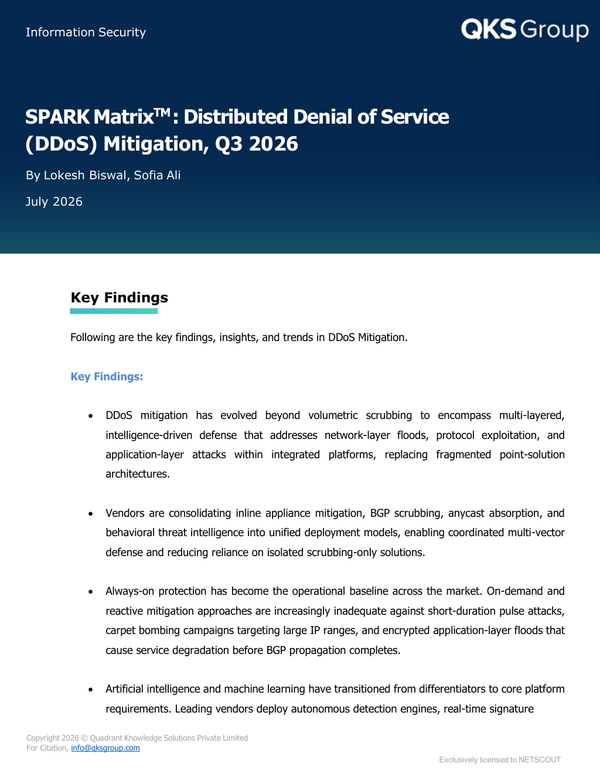
IT and network teams evaluating network observability can use this July 2025 QKS Group SPARK Matrix report to see how QKS Group defines network observability tools, how it positions vendors, and how it evaluates them. The report includes vendor profiles, among them NETSCOUT.
How does QKS Group define network observability tools?
QKS Group defines network observability tools as a suite of visibility tools that help users gain deep, actionable insights into the current and historical behavior of network infrastructure. Users rely on real-time telemetry, enriched dashboards, intelligent alerts, and interactive visualizations for continuous monitoring, diagnostics, and predictive analysis.
What do the key findings say about vendor positioning?
The report positions NETSCOUT, Cisco, Riverbed, SolarWinds, and Arista as leaders that unify monitoring, analytics, and automation. It says vendors such as HPE Aruba, Broadcom, Ericsson, and InfoVista show strong foundational network performance monitoring but must evolve toward AI-native and cloud-centric frameworks, and that the convergence of AI and machine learning analytics with secure access service edge (SASE) frameworks is becoming a defining advantage.
How does QKS Group evaluate vendors?
The SPARK Matrix ranks vendors on technology excellence and customer impact. Data representation and network flow analysis each carry a 15% weighting in technology excellence, while product strategy and performance and market presence each carry 20% in customer impact.
Frequently Asked Questions
What does the report say about NETSCOUT?
The profile describes the nGeniusONE platform as delivering real-time visibility across hybrid IT environments using Smart Data from packet-level traffic and synthetic tests, with a pay-as-you-grow model. It also says NETSCOUT's cloud observability capabilities appear comparatively basic and its analytics are human-driven.
What do users do with network observability tools?
According to the QKS Group definition, users engage in dynamic topology exploration, root cause correlation, service-level agreement (SLA) validation, and policy tuning to surface performance metrics, anomaly patterns, and traffic behaviors.
Asset Type: Reports